🇲🇾 Welcome to Kuala Lumpur
Kuala Lumpur is Asia's great melting pot—Malay, Chinese, Indian, and indigenous cultures blend into something uniquely Malaysian. The Petronas Twin Towers pierce the skyline, a symbol of modern ambition, while just blocks away, hawker stalls serve the same recipes they've made for generations. This is a city of contrasts: gleaming malls beside colonial architecture, calls to prayer mixing with temple bells, a food scene that spans Michelin stars to plastic-stool street food. KL (as everyone calls it) doesn't have the ancient temples of Bangkok or the colonial grandeur of Singapore, but it has something rarer: genuine diversity without sanitization. Chinatown still smells like incense and herbs; Little India pulses with Bollywood soundtracks; Kampung Baru remains a Malay village in the city's heart. The food alone justifies the visit—nasi lemak, char kway teow, roti canai, and laksa represent just the beginning. KL is hot, humid, and sprawling, but give it time and it reveals layers of flavor most capital cities have long since homogenized away.
Understanding Kuala Lumpur
Malaysia's diversity is real, not performed—Malays, Chinese, Indians, and indigenous peoples have coexisted here for generations. The constitution guarantees Malay privileges (bumiputera policies), creating tensions that visitors rarely see but locals navigate daily. Islam is the official religion; Malays are Muslim by law, but Chinese and Indian Malaysians maintain their own traditions freely. This creates a food culture where halal Malay and Muslim-Indian restaurants sit beside Chinese pork noodle shops and Hindu vegetarian cafes. KL sprawls without a single center—instead, neighborhoods each have distinct character. The heat is intense and constant; air conditioning is essential, and outdoor activities happen early morning or evening. Grab (the local Uber) is everywhere and cheap. English proficiency is high thanks to colonial history and education policy. Learn 'terima kasih' (thank you) and enjoy a city where Asia's cultures genuinely intermingle.
⚡ Essential KL Tips
• The heat is serious—35°C with high humidity daily. Hydrate constantly, seek air conditioning, and plan outdoor activities for early morning or evening.
• Grab (ride-hailing app) is essential. Taxis exist but Grab is cheaper, safer, and avoids haggling. Download before arriving.
• Petronas Towers Skybridge tickets sell out—book online days ahead at petronas-towers.com.my. Sunrise slots are less crowded.
🔍 Search Kuala Lumpur
🗺 Interactive Kuala Lumpur Map
🧭 Quick Navigation
🗺️ Kuala Lumpur Areas
KL sprawls without a single center. KLCC is the modern heart with Petronas Towers. Bukit Bintang is shopping and nightlife. Chinatown (Petaling Street) preserves Chinese heritage. Kampung Baru is a Malay village in the city. Brickfields is Little India. Each has distinct character; Grab makes moving between them easy.

Best For: Icons, malls, fine dining

Best For: Street food, temples, bargains
🏙️ KLCC & Petronas Towers
🚇 LRT to KLCC station • Direct mall access
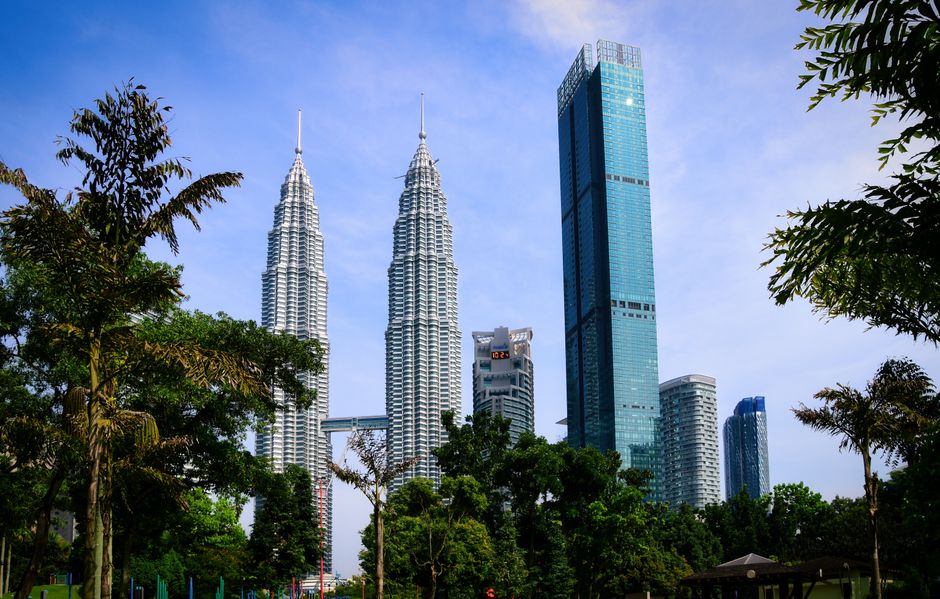
Modern Malaysia Rising
The Petronas Towers were the world's tallest buildings from 1998-2004—a symbol of Malaysia's ambitions. The 88-floor towers were designed by César Pelli with Islamic geometric patterns throughout. KLCC (Kuala Lumpur City Centre) developed around them: a park, convention center, aquarium, and high-end mall.
This is corporate KL—glass towers, luxury hotels, businesspeople in suits despite the heat. But the KLCC Park provides green relief, and the tower views remain genuinely impressive. The area is walkable with covered connections between buildings—essential in tropical downpours.
🏙️ Landmarks


🛍️ Shopping & Malls


🏛️ Chinatown (Petaling Street)
🚇 LRT to Pasar Seni • Walk to Petaling Street

KL's Historic Heart
Chinatown developed when Chinese tin miners settled here in the 1860s—the name 'Kuala Lumpur' means 'muddy confluence' from the tin-mining era. Petaling Street is the main artery, now a covered market selling everything from fake watches to traditional herbs. The streets around it hold temples, hawker stalls, and KL's oldest character.
This is old KL—chaotic, loud, aromatic. Sin Sze Si Ya Temple is the city's oldest Taoist temple. Sri Mahamariamman is a Hindu temple with a spectacular gopuram. The food is exceptional—Chinese coffee shops, Indian banana leaf rice, Malay nasi lemak all within blocks. Come hungry.
🛕 Temples


🍜 Street Food


🚇 Getting Around
🔒 Getting Around - Available in paid tiers
🏨 Where to Stay
🔒 Where to Stay - Available in paid tiers
🍜 Food Guide
🔒 Food Guide - Available in paid tiers
Must-Try Dishes
💡 Dining Tips
🎯 Book Activities in Kuala Lumpur
Tours, attractions, experiences & more
Powered by Klook • Best price guaranteed
🏨 Book Your Stay in Kuala Lumpur
Find the best hotels, hostels, and apartments
Best price across Booking, Expedia, VRBO & more • Powered by Stay22
📋 Practical Information
🔒 Practical Info - Available in paid tiers🌞 Sunny Travel Guides
The Confidence To Travel / Never Be Lost
© 2026 Sunny Travel Guides. All rights reserved.